


The healthcare industry is evolving fast. New technology, growing amounts of data, and rising expectations are reshaping how healthcare systems work. At the same time, healthcare providers and patients rely more than ever on digital tools to deliver and receive care.
This shift has created significant challenges. Healthcare products must support complex workflows, protect sensitive data, and serve people in critical moments. That is why healthcare UX design plays a crucial role. Strong healthcare UX helps reduce errors, improve clarity, and create safer interactions across healthcare applications.
A reliable design agency understands this complexity. It combines UX design, clear information architecture, and deep knowledge of healthcare needs. The goal is simple: create usable, secure, and human-centered products that work for real people in real healthcare settings.
Why healthcare UX design is different
Healthcare UX design is unique due to the complex environment in which it operates. The healthcare industry lags behind other industries in implementing new technologies and processes due to a lack of user-centered design. Unlike other industries, healthcare products support medical care, clinical decisions, and daily workflows for healthcare providers and healthcare professionals. The stakes are high, so errors can have serious consequences.
1. Multiple stakeholders with distinct needs
- Patients, clinicians, administrators, and caregivers all use the same platforms.
- Each group has different goals, technical skills, and priorities.
- Designing for diverse users requires a deep understanding of real healthcare settings and user needs.
2. Complex data and information
- Healthcare applications handle medical data and patient information.
- Clear information architecture and effective data visualization are essential.
- Products must comply with regulatory standards and include robust security measures to protect sensitive data.
3. Critical and time-sensitive interactions
- Healthcare decisions often happen under pressure.
- A user friendly interface and easy access to information can save time and improve patient care.
- Poor UX increases cognitive load and risks compromising the healthcare experience.
4. Beyond visual design
- Successful healthcare UX is not just about aesthetics.
- It requires usability testing and collaboration between UX professionals and healthcare companies.
- Well-designed healthcare UX supports better outcomes for both patients and providers.
What makes a good healthcare design agency
Choosing the right healthcare design agency is critical. The healthcare sector faces unique challenges due to the complexity of medical data and the diverse needs of its users. Healthcare systems involve multiple stakeholders, each with distinct needs and priorities, complicating the design process for UX designers.
Not all UX studios can handle the complexity of healthcare products and the needs of healthcare providers. A strong agency combines design expertise with a deep understanding of healthcare workflows, patient needs, and regulatory requirements.
Reviewing an agency's medical portfolio is important for ensuring expertise in relevant healthcare environments. The sensitive nature of medical data requires compliance with regulations such as HIPAA, adding complexity to the design process. Regulatory knowledge is essential for healthcare design agencies, including understanding The Joint Commission and CMS regulations.
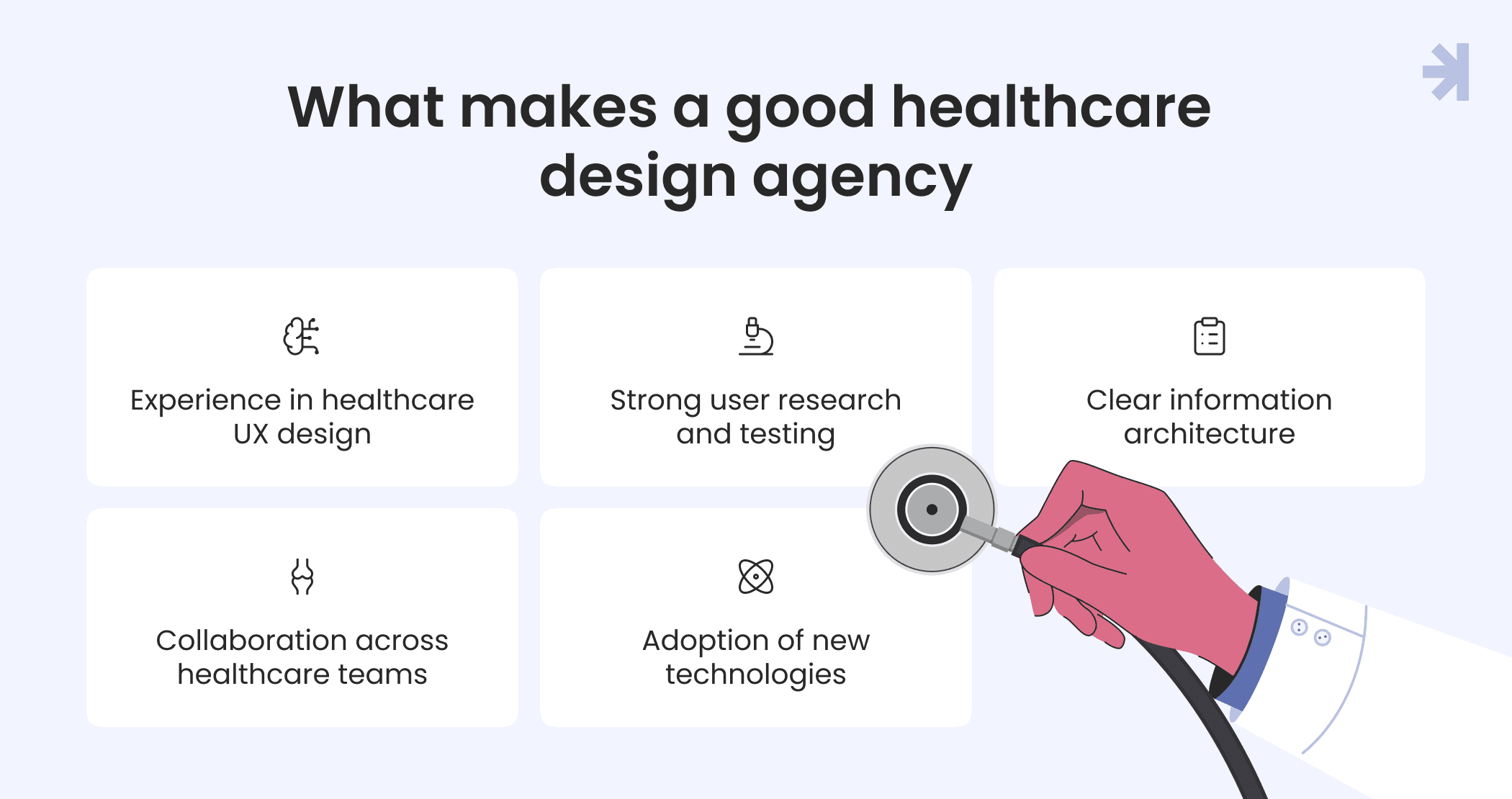
1. Experience in healthcare UX design
- Proven work with healthcare applications, patient portals, and medical devices.
- Demonstrated ability to improve healthcare user experience for both patients and healthcare professionals.
- Familiarity with healthcare systems and the healthcare sector.
2. Strong user research and testing
- Conducts research to understand the diverse needs of patients and providers.
- Test designs with users to make healthcare tools easy to use.
- Provides actionable insights to inform design decisions.
3. Clear information architecture
- Structures complex medical data and patient information for easy access.
- Uses data visualization effectively to support clinical and administrative decisions.
- Prioritizes clarity, consistency, and accessibility in every interface.
4. Collaboration across healthcare teams
- Understands the workflows of healthcare providers and integrates their feedback.
- Balances user needs with business goals.
5. Adoption of new technologies
- Integrates AI-powered features and cutting-edge technology, where it adds real value.
- Design solutions that adapt to evolving healthcare technologies and trends.
- Supports healthcare innovation while keeping the patient experience at the center.
Top UX design agencies for healthcare products
1. MagicFlux
MagicFlux is a UI/UX design agency specializing in complex digital healthcare products – clinical documentation platforms, patient portals, HealthTech SaaS tools, and enterprise systems where design has to work under real clinical and regulatory constraints. Their work covers the full scope of healthcare UX: user research, information architecture, UX audits, design systems, and end-to-end UI/UX design for products serving clinicians, administrators, and patients within the same platform.
MagicFlux grew out of TechMagic, a software development company with 10+ years of experience building complex digital products for startups and enterprises. That background means their designers have worked directly alongside engineers on real HealthTech products, giving them a practical understanding of what breaks in production and what creates friction for clinical staff under pressure.
Their healthcare work includes Tiro.health, a medical documentation platform where role-based UX redesign delivered measurable results: doctors completed forms up to 20% faster, admin staff reduced form creation time by 30%, and a shared WCAG-compliant design system cut development time by 25%. They hold certifications from IAAP, W3C, IxDF, IBM, and UXCC.
See the Tiro.health case study
Best for: HealthTech startups and enterprise healthcare teams building complex, multi-role digital products where clinical accuracy, accessibility, and design system consistency matter.
2. ELEKS
ELEKS is a global agency known for designing healthcare systems and medical devices. They focus on healthcare UX, AI-powered solutions, and user friendly interfaces that support healthcare professionals and patients alike.
Best for: Large healthcare enterprises and hospital systems that need a full-service technology partner covering both design and software development under one roof.
3. Qubstudio
Qubstudio delivers healthcare UX solutions for startups and enterprise clients. They provide healthcare technologies with clear information architecture and a strong focus on patient engagement.
Best for: HealthTech startups and mid-size healthcare companies that need research-driven UX with strong information architecture for patient-facing products.
4. Cieden
Cieden helps healthcare companies improve healthcare user experience through UX design and strategy. Their team works on applications, data visualization, and tools for healthcare services.
Best for: Healthcare SaaS companies that want a data-first design approach and close collaboration throughout the product lifecycle.
5. Eleken
Eleken specializes in UI and UX design for the healthcare sector, including patient portals and applications for patient care. They focus on making interfaces intuitive and efficient for both patients and professionals.
Best for: HealthTech product teams looking for a dedicated, embedded design partner for long-term SaaS and clinical tool development.
6. GoInvo
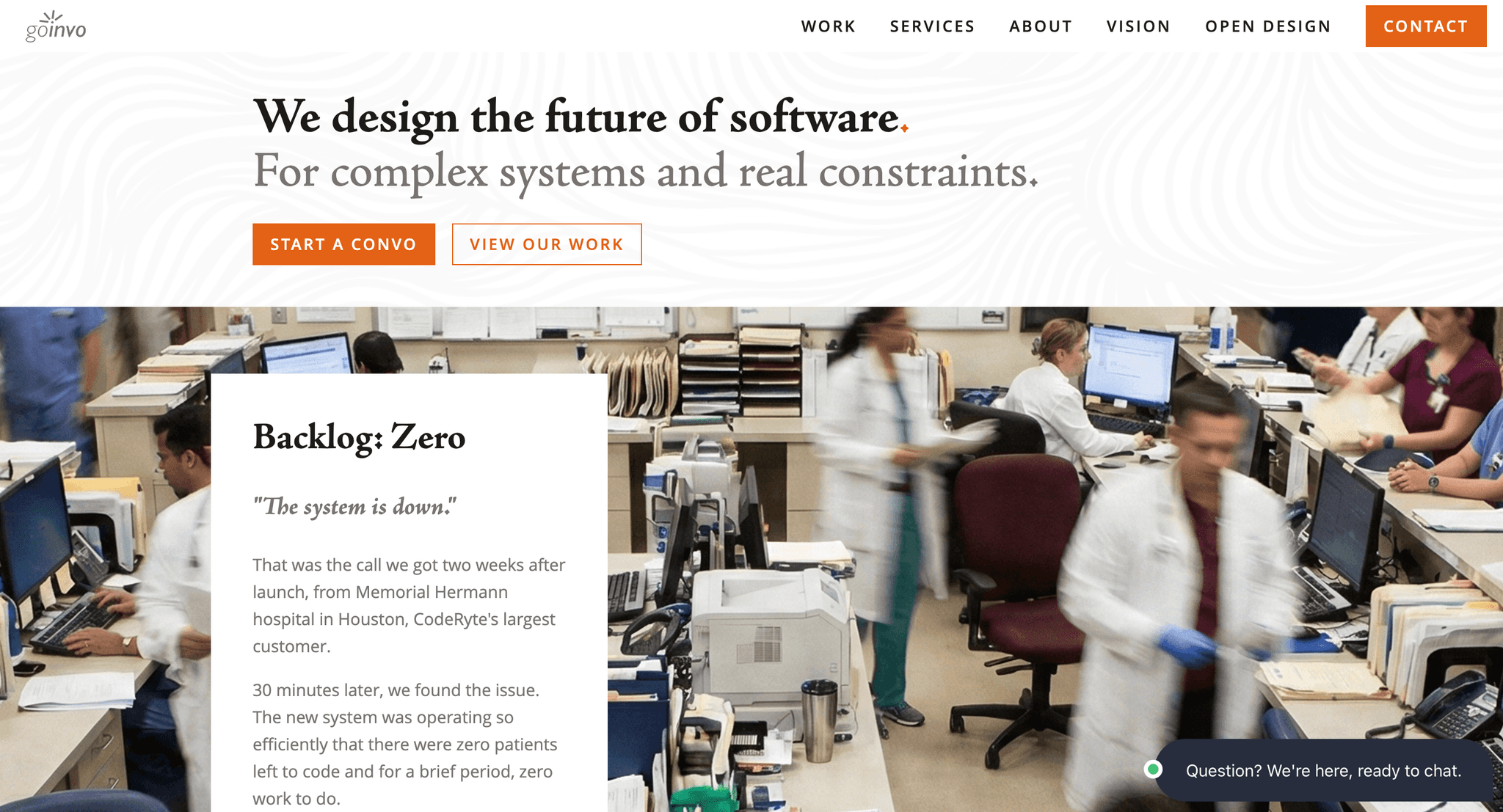
GoInvo creates products with a strong emphasis on a smooth user experience. Their designs improve patient care by simplifying complex workflows and making healthcare systems easier to use.
Best for: Healthcare organizations focused on open-source health design and products where patient empowerment and health literacy are the primary design goals.
7. UX Studio
UX Studio delivers healthcare UX design for digital health platforms. They combine usability research, information architecture, and UX strategy to improve applications for patients and providers.
Best for: Digital health platforms and healthcare startups that need strong UX strategy and research to validate product direction before heavy development investment.
8. ANODA
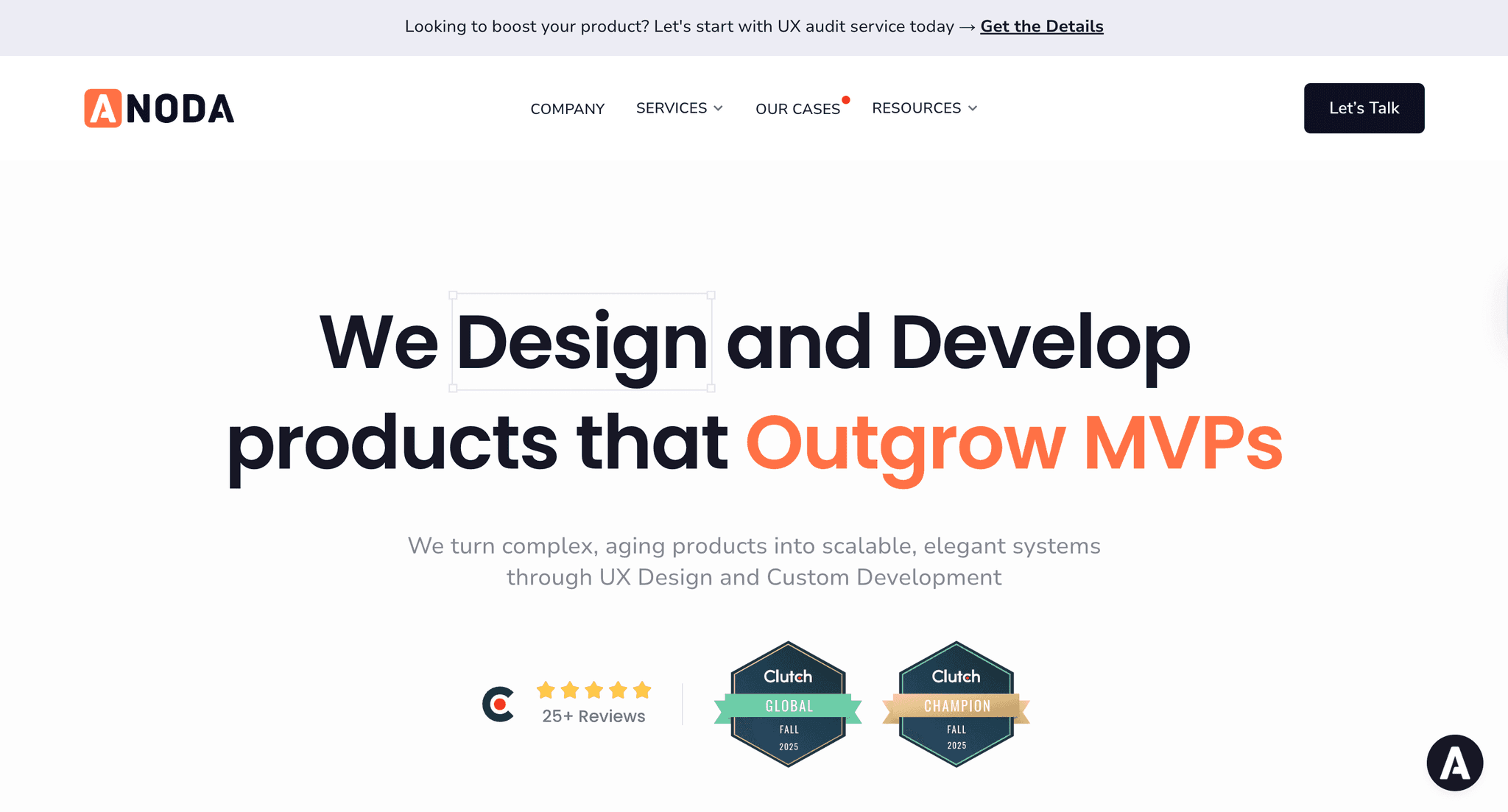
ANODA focuses on healthcare innovation, building AI-powered and data-driven products. Their UX solutions enhance the patient experience and streamline workflows for better user interactions.
Best for: Healthcare teams building AI-powered and data-driven mobile health products where engagement and personalization are central to the user experience.
9. DreamX
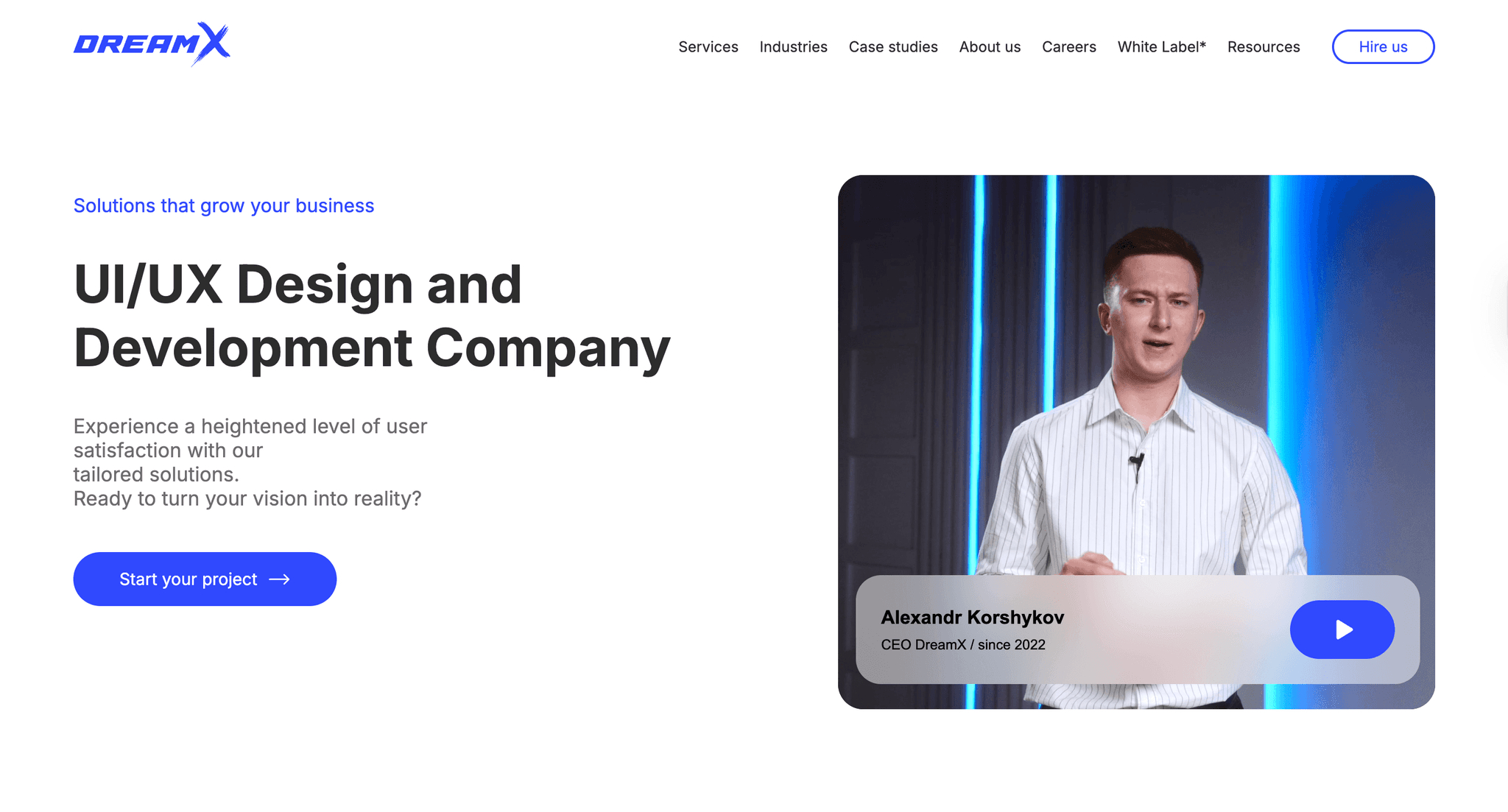
DreamX designs health applications with clear user interfaces. Their team emphasizes user engagement and accessibility, allowing patients and professionals to make informed decisions.
Best for: Early-stage HealthTech companies that need clean, accessible UI design for health applications with a focus on patient-facing interfaces.
10. Koru UX
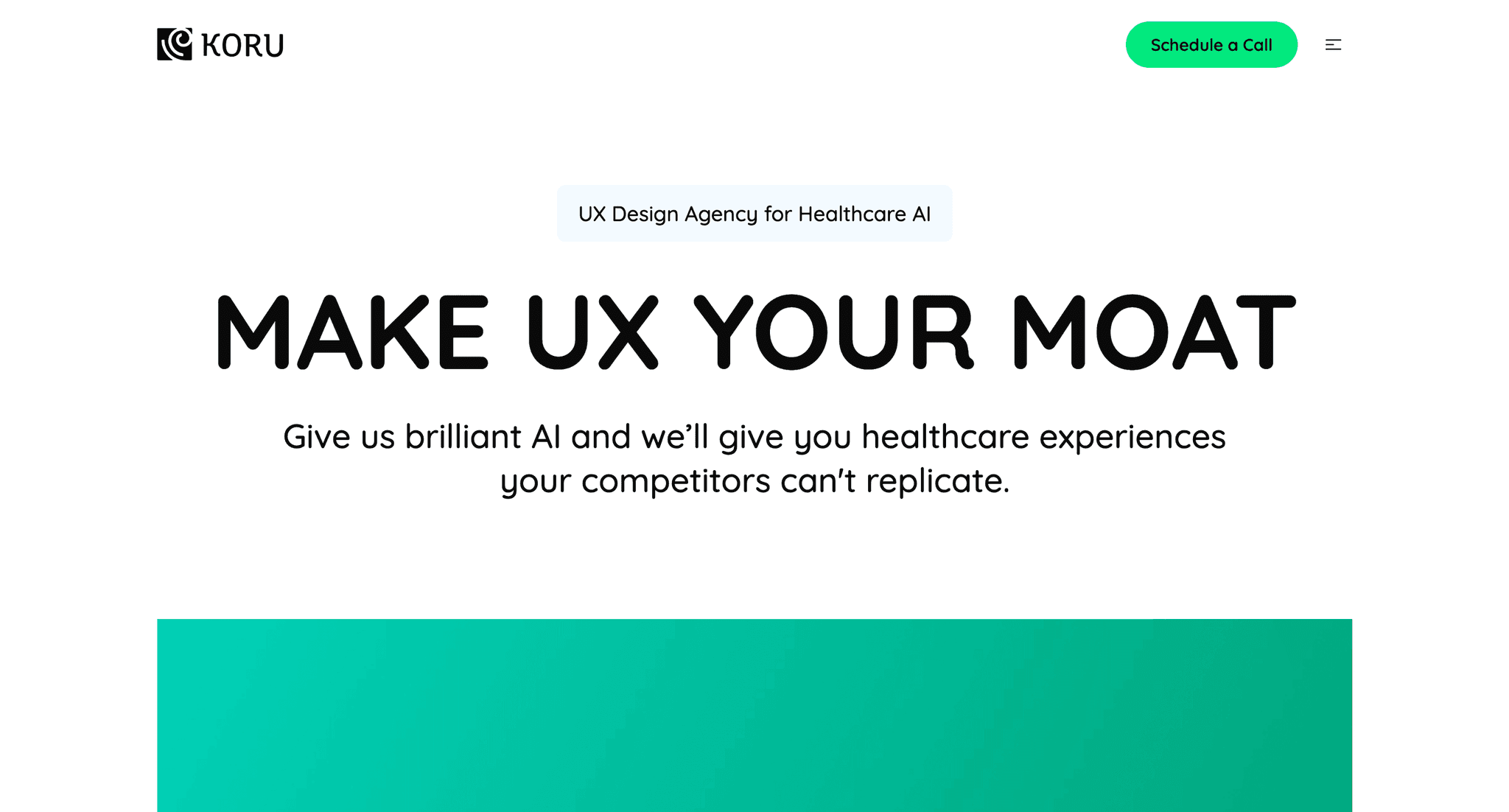
Koru UX creates healthcare UX solutions for complex platforms. They use the latest trends in the health sector and user-centered design to make healthcare systems more intuitive and effective.
Best for: Healthcare organizations dealing with complex legacy systems that need a specialist in untangling complicated workflows and making them usable for clinical staff.
Final thoughts
The healthcare industry is evolving rapidly, and strong healthcare UX design is more important than ever. Well-designed applications and patient portals improve patient care, support providers, and make complex healthcare systems easier to navigate.
Choosing the right design agency makes your products user-friendly, secure, and effective. Agencies like MagicFlux combine user-centered design, information architecture, and AI-powered features to create meaningful solutions that meet the needs of both patients and healthcare professionals.
Good healthcare UX isn’t just about aesthetics. It improves the user experience, supports informed decisions, and drives healthcare innovation. Investing in thoughtful UX design today creates safer, more efficient, and more accessible health products for the future.
Design your product with MagicFlux
Designing digital products for the health sector comes with unique challenges. From regulatory constraints to handling sensitive patient data across multiple sources, every decision matters. The critical nature of healthcare workflows means interfaces must be precise, intuitive, and reliable.
At MagicFlux, our team of UX designers tackles these significant challenges every day. We work closely to create clear interfaces for patients, providers, and systems – whether it’s a patient portal, electronic health record, or applications supporting preventive care and treatment options.
Our designs simplify complex workflows, integrate technology seamlessly, and make sure that both patients and providers can access the right information at the right time. By focusing on the future of healthcare, we help companies deliver better health outcomes and improve user experiences.
Partner with MagicFlux to overcome the unique challenges of healthcare UX and build products that empower patients and professionals.

1. What should I look for when choosing a healthcare UX design agency?
Look for an agency with a portfolio of real healthcare products, not just general SaaS or consumer apps. Healthcare UX requires specific knowledge of clinical workflows, regulatory constraints like HIPAA and GDPR, and the ability to design for multiple user roles within the same system. Beyond the portfolio, pay attention to their research process. Agencies that conduct real user research with clinical staff and patients before designing produce measurably better outcomes than those that rely on general UX principles applied to healthcare. How they communicate during the sales process is also a reliable preview of how the engagement will go.
2. How is healthcare UX design different from general UX design?
Healthcare products operate in environments where poor design has direct consequences such as delayed clinical decisions, increased administrative errors, patient disengagement from care. Unlike consumer products where users can simply stop using something that frustrates them, healthcare users often have no alternative. That raises the stakes for every design decision. Healthcare UX also requires designing for users under significant time and cognitive pressure, handling sensitive data with strict compliance requirements, and serving multiple user groups who interact with the same system in completely different ways.
3. How long does a healthcare UX design project typically take?
Scope varies significantly depending on the complexity of the product and the number of user roles involved. A focused engagement such as a UX audit or a redesign of a specific workflow can deliver results within 3-6 weeks. A full product design engagement covering research, information architecture, wireframes, and design system work for a multi-role healthcare platform typically runs 8-16 weeks. Starting with a clearly scoped audit is often the fastest way to identify where the most impactful improvements can be made before committing to a larger engagement.
4. Do healthcare UX agencies work with startups or only large healthcare organizations?
Both but the right agency depends on your stage. Early-stage HealthTech startups benefit most from agencies experienced in product discovery and rapid iteration, where design helps validate the product direction before significant development investment. Larger healthcare organizations typically need agencies comfortable working within existing systems, legacy constraints, and multi-stakeholder environments where change management is part of the design process. The agencies on this list work across both contexts. The "best for" labels on each entry are the fastest way to match your situation to the right partner.