Designing for users with dyslexia

Guidelines for creating clear, readable, and inclusive digital experiences.
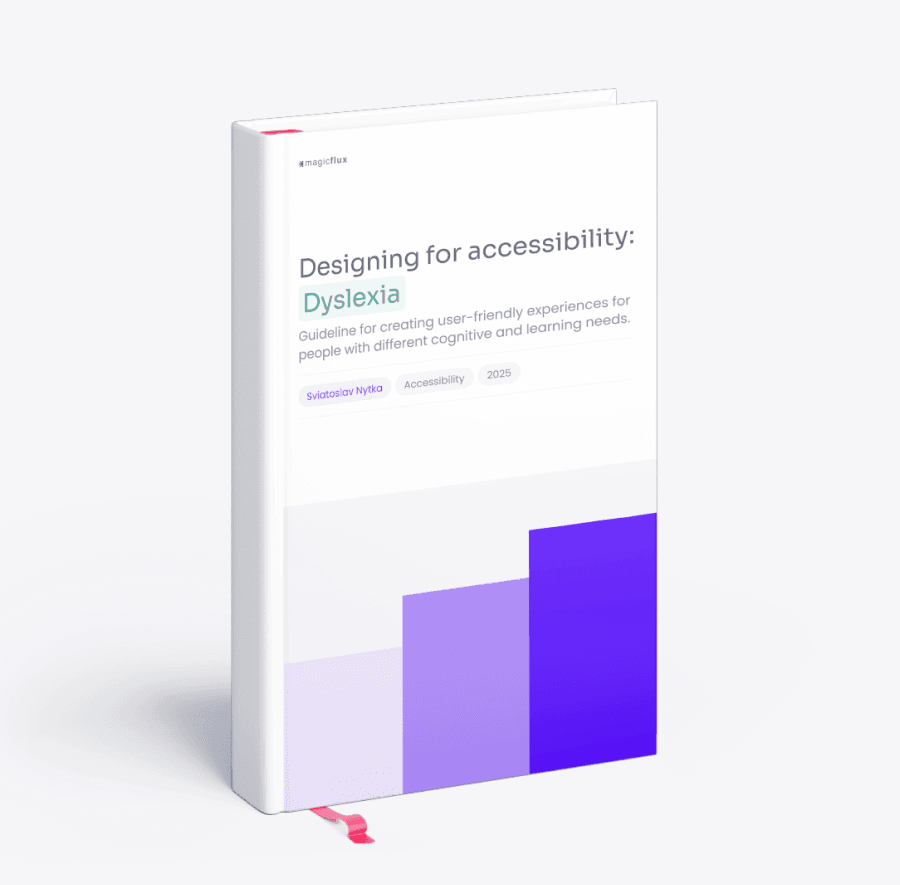
hero-image

15-20% of people worldwide have dyslexia.

Poor readability can increase task completion time by up to 50% in complex or content-heavy interfaces.

Accessibility issues are most critical in healthcare and regulated products.

Meeting WCAG contrast and text requirements significantly improves comprehension and reduces errors


What this PDF helps you do

Reduce cognitive load
Improve readability for dyslexic users
Make WCAG-based decisions without overdesigning
Avoid common typography and contrast mistakes
Design content that feels calmer and easier to scan
Improve comprehension and reading speed

Who it’s for

item-icon
UX/UI designers
item-icon
Design leads & managers
item-icon
Product managers
item-icon
Developers
item-icon
Content writers & editors
item-icon
Teams handling regulated or healthcare products

Why this guide matters

Designing for dyslexia improves the experience for everyone, not only a specific group.

Why this guide matters

You can use it as:

  • A quick reference
  • A design review checklist
  • A shared accessibility baseline for your team
Why this guide matters

Why it’s good for business:

Better readability leads to:

  • Faster comprehension
  • Fewer errors
  • Higher user confidence
  • Better satisfaction and trust
Designing for users with dyslexia

Guidelines for creating clear, readable, and inclusive digital experiences.
Sviatoslav Nytka
Accessibility
2025
Designing for users with dyslexia

We use cookies to personalize content and ads, to provide social media features and to analyze our traffic. Check our privacy policy to learn more about how we process your personal data.