


Planning a new website or a UX design project? One of the first questions is always: “How much is this going to cost?” Design pricing can feel confusing, especially if you’re hiring a freelancer, agency, or building your first digital product.
Understanding design costs helps you make smarter decisions, plan your budget, and get a product that truly works for your users and your business.
In this guide, we’ll cover typical design rates, the factors that influence pricing, the most common pricing models, and tips to budget your UI/UX design project effectively. We’ll also highlight common mistakes to avoid when hiring designers, so you can make your project smooth, predictable, and visually appealing.
Why knowing design project costs matters
Knowing what goes into product design pricing saves time, money, and frustration. Clear design pricing helps you:
- Plan your budget without unexpected costs
- Make informed hiring decisions for a UI/UX design agency or freelancer
- Provide fair compensation for designers while getting design quality
- Collaborate more efficiently with your development team
Investing in a professional UI/UX design agency doesn’t just make your product look good. Thoughtful user interface design improves user satisfaction, guides users through intuitive interfaces, and increases the chance of meeting your business goals.
A well-designed product or website is also easier to maintain, scale, and adapt as your audience grows. In other words: good design pays for itself.
What factors affect design pricing
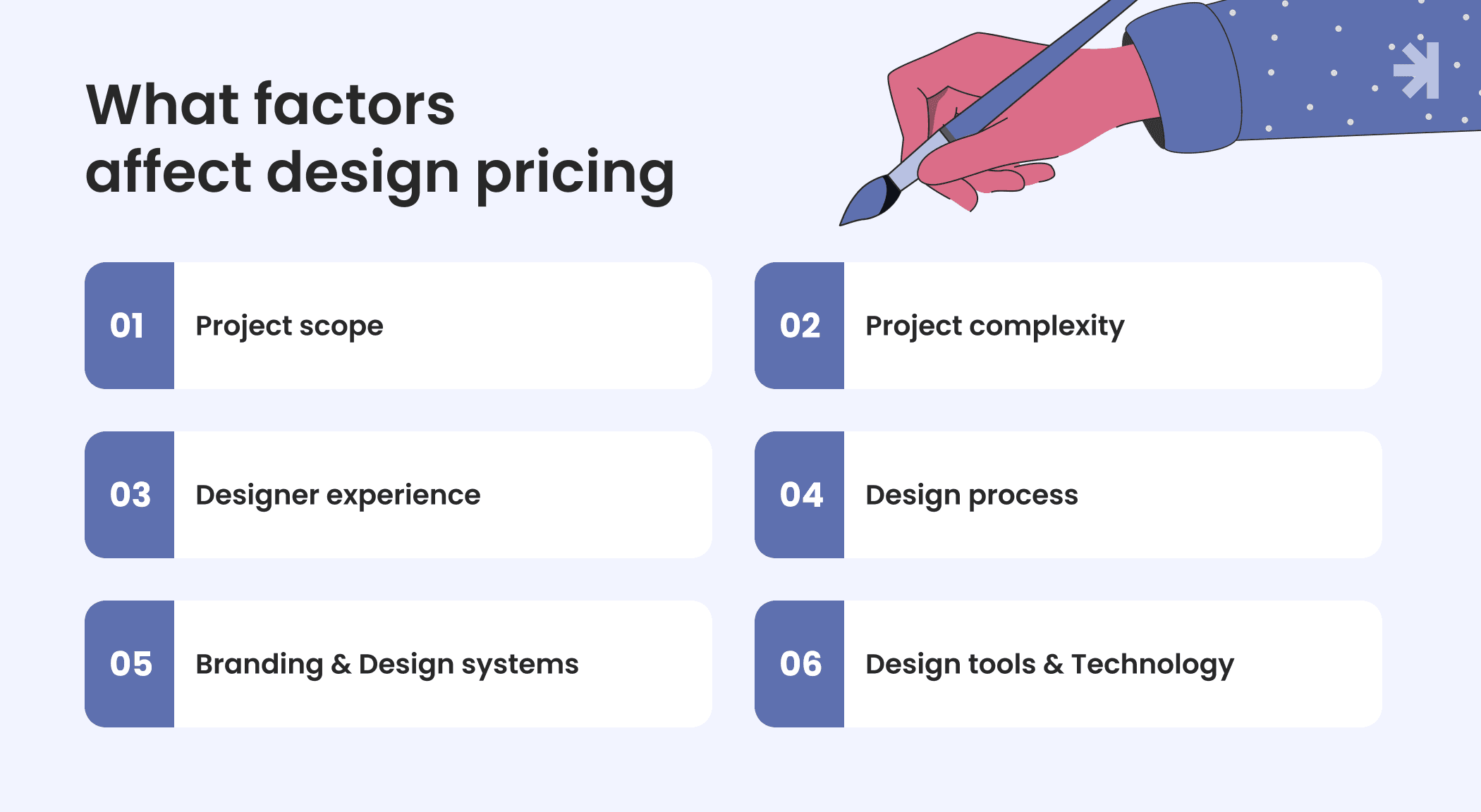
Not all UI/UX designs cost the same. Here’s what typically affects the design cost:
Project scope
Number of screens, pages, or features. Are you designing a small brochure website or a well-designed mobile app? More features mean higher costs. Designing for multiple platforms is more expensive than creating an application for a single platform, due to varying design guidelines and complexities.
Project complexity
Projects with interactive elements, advanced features, or complex user flows require more time and expertise.
Designer experience
Freelancers may charge less, but skilled designers or agencies bring structured UX research, usability testing, and refined UI design services.
Design process
The design process typically includes phases such as research and discovery, wireframing and prototyping, and final design and development handoff. User research is key to understanding user needs and avoiding unnecessary features. Prototyping helps identify potential design flaws early in the process, saving time and resources.
Branding and design systems
Custom UI elements, brand identity, and reusable design systems ensure consistency but increase cost.
Design tools and technology
Using website builders, CMS platforms, or custom-coded solutions changes both pricing and timelines.
Understanding these factors helps you estimate web design costs and plan a realistic budget for your UI/UX design project.
Common UX design price models
Designers offer a few different ways to charge, depending on your project:
- Hourly rates – Best for small adjustments, ongoing projects, iterative UI design services or UX audits. Regular UX audits can enhance user interaction and identify usability issues.
- Fixed project pricing – Perfect when the deliverables are clearly defined, like a new website, landing page, or basic app design.
- Retainer-based pricing – Useful for ongoing UX design services, long-term support, or continuous design updates.
- Package pricing – Common for affordable website design packages, offering a predefined set of pages or features at a predictable cost.
The cost of a UI/UX design project can differ significantly based on project complexity and location. The right model depends on your project complexity, timeline, and whether you want design from start to finish.
Freelancer vs. Agency: Which is right for your project?
This is one of the most common decisions product teams face when budgeting for design work, and the answer isn't simply about cost. It's about what your project actually needs to succeed.
What a freelance designer gives you
A freelance designer offers flexibility, lower hourly rates, and direct access to one person's skills and perspective. For well-defined, contained projects, a strong freelancer can deliver excellent work: a landing page redesign, a specific set of UI components, visual polish on a product that already has solid UX foundations.
The limitations become apparent on more complex work. A single freelancer has one skill set, one perspective, and finite capacity. Projects that require simultaneous user research, information architecture, interaction design, and development handoff typically exceed what one person can deliver well without cutting corners somewhere. Freelancers also carry availability risk: if they're sick, overbooked, or move on mid-project, your timeline moves with them.
What a UI/UX design agency gives you
An agency brings a team with complementary skills working under a structured process. User researchers, UX strategists, interaction designers, and UI designers working together produce outcomes that no single generalist can replicate. That structure also means continuity: if one team member is unavailable, the project doesn't stop.
Beyond headcount, agencies bring institutional knowledge from working across many products, industries, and problem types. Pattern recognition built from dozens of projects means faster identification of what will and won't work for your specific situation, fewer expensive mistakes, and less time spent reinventing solutions that have already been tested elsewhere.
Agencies also typically handle the full scope of a design engagement: discovery, research, design, testing, iteration, and handoff documentation. That end-to-end ownership removes the coordination burden from your team and produces a more coherent final product.
The cost difference in context
Agency rates are higher than freelance rates. That's true and worth acknowledging directly. But the relevant comparison isn't hourly rate vs. hourly rate. It's total project cost vs. total project outcome. A freelancer who charges less per hour but takes longer, requires more direction, produces work that needs significant revision, or delivers designs that create problems at the development handoff can easily cost more in total than an agency that moves faster and more predictably. The hidden costs of design work done at insufficient quality, including development rework, delayed launches, and post-launch usability problems, are almost always more expensive than the premium for doing it properly the first time.
How to decide
A few questions that help clarify the right choice for your situation:
- Is the project scope well-defined or likely to evolve? Well-defined scopes favor freelancers. Evolving, complex scopes favor agencies with structured processes that handle ambiguity well.
- Does the project require multiple design disciplines simultaneously? Single-discipline projects can work well with a specialist freelancer. Multi-discipline projects need a team.
- What is the cost of getting this wrong? For a marketing page, the cost of a mediocre outcome is low and recoverable. For a core product experience, a clinical tool, or a platform serving multiple user types, the cost of getting the design wrong compounds across every user interaction from launch onward. The higher the stakes, the stronger the case for an agency with a proven process.
- Do you have internal capacity to manage a freelancer closely? Freelancers typically need more direction and feedback. If your team has the bandwidth to manage that relationship well, a freelancer can work. If your team is already stretched, an agency that owns the process end-to-end reduces your management burden significantly.
See how MagicFlux approaches design engagements
Tips for budgeting your design project
Here’s how to plan effectively and avoid surprises:
- Define goals, deliverables, and core features clearly for your design. Design projects priced on a fixed-price model are ideal for well-defined scopes, such as MVP launches.
- Compare quotes, portfolios, and past work from freelancers or UI/UX design agencies.
- Allocate a buffer for changes and user feedback. Timely feedback is crucial to prevent project delays and cost increases.
- Consider long-term ROI, not just upfront website cost. Agencies usually offer more comprehensive teams, including researchers, strategists, and project managers, at a higher cost compared to freelancers.
- Prioritize user-centered design so your product meets user expectations from the start. Data-driven design ensures that every design element serves a purpose based on real-world insights.
Smart budgeting keeps your final design efficient and ensures your design costs translate into great value. Defining the project scope early helps avoid unexpected changes and saves time.
Common mistakes when hiring designers
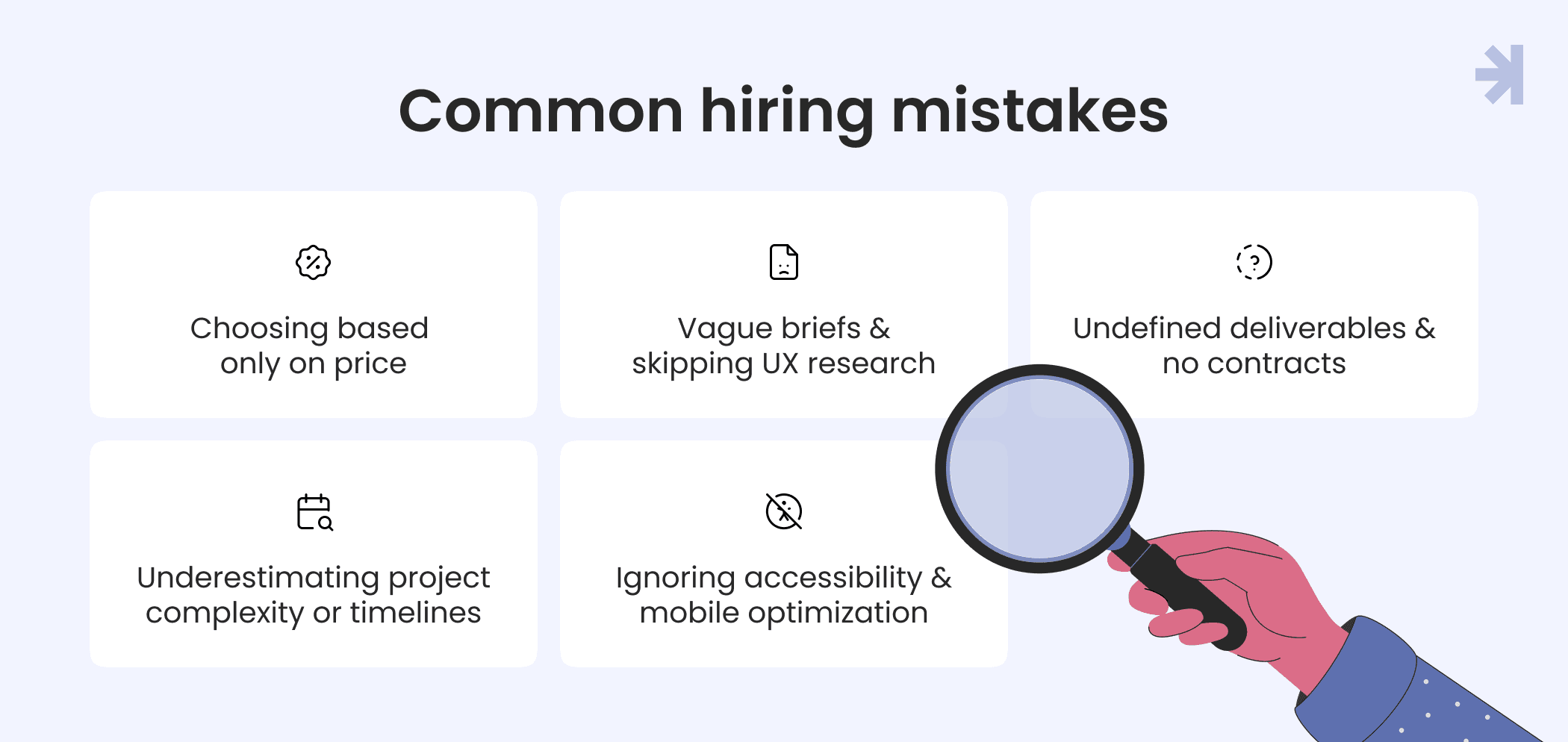
Avoid these common pitfalls:
- Choosing based only on price
- Giving vague briefs or skipping UX research
- Not defining deliverables or signing contracts
- Underestimating project complexity or timelines
- Ignoring accessibility or mobile optimization
A thoughtful hiring process ensures a smooth UI/UX design project that aligns with user expectations, delivers user satisfaction, and sets your product up for success.
Not sure what your design project should cost? Let's figure it out together.
The honest answer to "how much will this cost?" is: it depends on what you're actually trying to achieve. A design engagement scoped around real user problems and measurable outcomes looks very different from one scoped around a list of deliverables. The first produces better results and is almost always better value.
At MagicFlux, we help product teams understand what their design investment should include, what it should produce, and how to measure whether it worked.
Explore our UI/UX design services See the Tiro.health case study for a concrete example of what that looks like on a complex product.
Get in touch and we'll help you scope your project honestly.
FAQ
What factors affect web design pricing?
Everything from project scope and project complexity to designer experience, branding, user research, and ongoing UX design services.
How much do designers typically charge for a new website?
It depends significantly on what you're building and who you're building it for. Entry-level websites for small businesses built on templates or website builders typically range from $1,500 to $10,000. These projects involve minimal custom design, limited user research, and straightforward content structures. Custom UI/UX design for digital products is a different category entirely. A SaaS platform, a healthcare application, or an enterprise tool involves user research, information architecture, multiple user roles, interactive prototypes, usability testing, and a design system that supports ongoing development. Engagements at this level are scoped by complexity and deliverables rather than by page count, and the investment reflects the depth of work required to produce a product that performs under real conditions with real users. The more useful question for most product teams isn't "how much does design cost?" but "what should we expect to get for our investment?" A well-scoped design engagement for a complex product pays for itself in reduced development rework, faster user adoption, and measurable improvements in the metrics that matter to your business.
What is the cost difference between hiring a freelance designer vs. an agency?
Freelancers often charge lower UI design rates, which can seem appealing at first. However, a UI/UX design agency brings a full-service approach: structured research, user testing, consistent design systems, and close collaboration with development teams. While the upfront cost is higher, agencies deliver higher design quality, fewer revisions, and a smoother process making them the better choice for most businesses that want reliable, scalable results.
How does responsive design affect cost?
Designing for multiple screen sizes and testing interactive elements adds time and design cost but provide user satisfaction across devices.
Are professional user interface design services worth it for small businesses?
Absolutely. Good UI/UX design improves user interaction, user flows, and user satisfaction, driving higher engagement and conversion rates.