


Search for "AI design agency" and you'll get two very different kinds of results. Some are agencies that use AI tools to speed up their own creative process: faster mockups, quicker first drafts, more ideas in less time. Others are agencies whose actual focus is AI product design: UI design where a model's output shapes what a user sees, decides, or trusts.
This list is about the second kind.
If your product runs on a model, generates recommendations, or hands some of the decision-making to artificial intelligence, you're not just solving a UX design problem. You're solving a trust problem. Users need to understand what the AI solution is doing, know when to trust it, and know what to do when it gets something wrong. That's a different skill from UX design for a clean dashboard or a nice onboarding flow, and not every AI design agency has the track record to back it up.
A lot of "best AI design agencies" lists don't make that distinction. Plenty of design teams added AI to their service page a few years ago and called it a focus. Here, the bar is simple: has this agency actually shipped real UX design on an AI product where model output affects what a user sees or decides, not just a concept deck or a prototype.
Here are 10 agencies that clear that bar, what each is best at, and how to think about choosing between them for your product.
What actually separates an AI design specialist from a generalist
Before the list, it helps to know what you're actually looking for. Here's what separates an AI design agency that genuinely does AI product design from one that added AI to its site.
-
They have a track record on real projects, not just prototypes A polished concept deck is easy. A real project where a model's output changes what a user sees or decides is harder, and it's the clearest proof an agency knows what they're doing. Ask to see their work, not just hear about it.
-
They design for uncertainty, not just clean states Traditional UX design assumes the system knows the right answer. AI design doesn't work that way. A good design process accounts for the in-between: how confident is the model, what happens when it's wrong, how does a user recover from a bad recommendation. If a design agency can't walk through how they've handled this, they haven't handled it.
-
They understand agent interfaces are a different problem than chatbot interfaces A chatbot answers questions inside a conversation. An AI agent takes actions across tools on a user's behalf, so the UI design has to show what it's doing, its status, and a clear way to step in or stop it. These aren't the same design problem, and treating them the same is a sign the team hasn't actually worked through real user journeys for this kind of product.
-
They can handle multi-role or enterprise complexity AI products rarely serve one type of user. A clinician, an administrator, and a patient need different things from the same system, and understanding that user behavior is central to good UX design. A design agency that's only worked on single-user consumer apps may not have the process for this.
-
They bring real design systems and quality that holds up AI features still have to work inside a coherent product, not sit on top of it as a bolt-on. Design teams with strong design systems keep every screen on brand and consistent, and treat brand consistency as part of design quality, not an afterthought, as the product grows.
If a design agency can speak to all five with specifics, not just talking points, that's a strong sign they belong on your shortlist.
How we picked this list of the best AI design agencies
We didn't just pull from other lists or rank by name recognition. We looked at each design agency's actual work: real projects with model-driven interfaces, not concept decks or brand refreshes with an "AI" label attached.
For each agency, we looked at:
- Track record on shipped AI products, not prototypes or pitch decks
- Evidence of real user research behind their design process, not just polished visual output
- How they've handled uncertainty and trust in interface design, since that's the hardest part of AI product design and the easiest to fake
- Range of user journeys they've designed for, including multi-role or enterprise-level complexity
- Design systems maturity, since AI features that don't hold up to the rest of the product aren't good ux design, no matter how impressive the demo looks
One more thing worth saying upfront: MagicFlux is on this list. We didn't add ourselves to pad it out. We're here because our client work, including a multi-role AI-assisted healthcare product, holds up against the same criteria above. Judge that for yourself as you read the rest.
The order below isn't a strict ranking. It's organized by what each design agency is genuinely best for, so you can match a team to your product instead of just picking whoever's listed first.
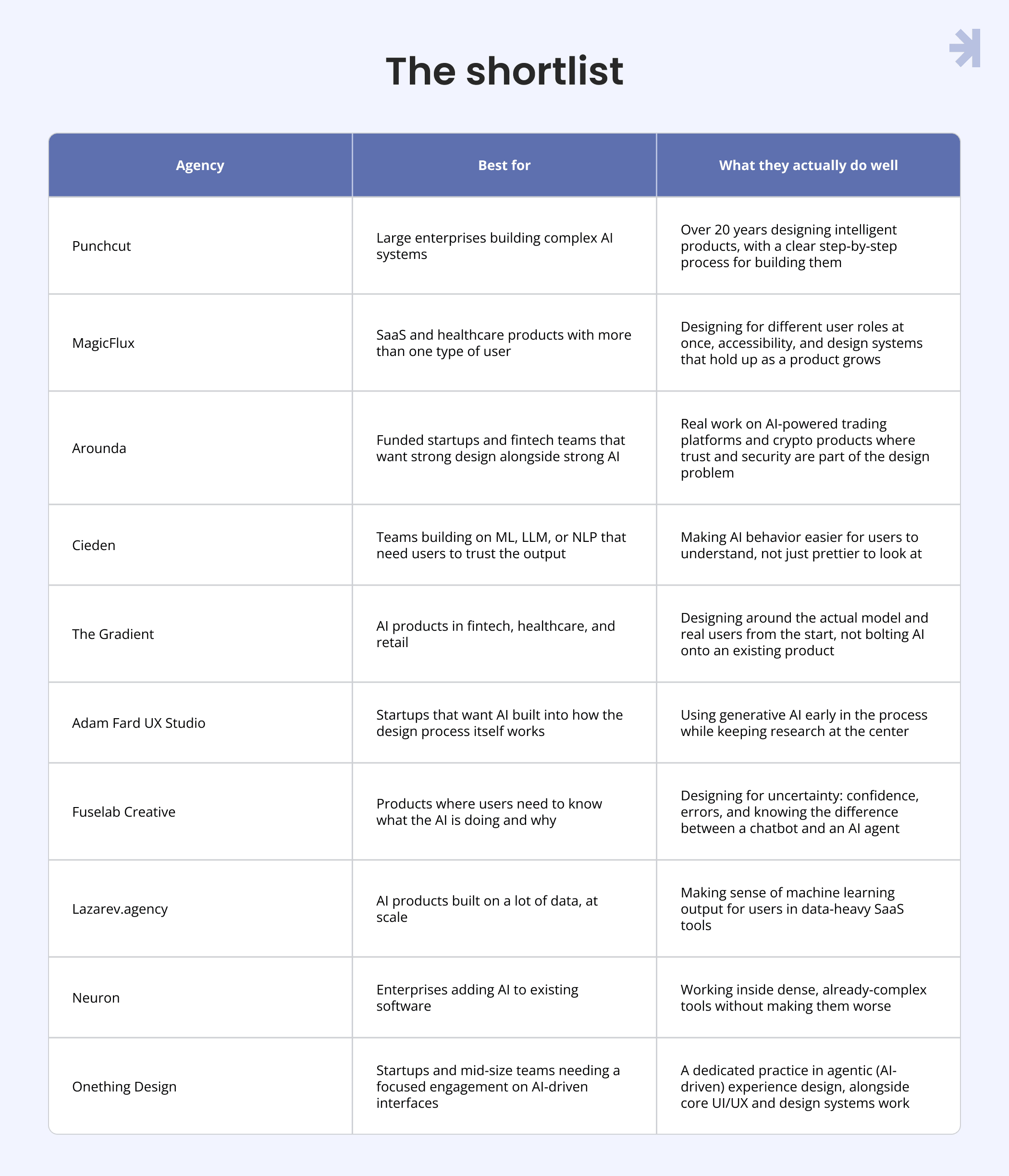
The list at a glance
A closer look at each agency
1. Punchcut
Punchcut has spent more than 20 years designing intelligent systems, long before AI became a buzzword on every agency's homepage. Their design accelerator model takes a product from concept to a production-ready AI system in as little as 6 to 12 weeks, which matters for enterprise product teams who need real output, not just a strategy deck. If your product spans multiple AI touchpoints and you need a partner who can move fast at enterprise scale, this is where to start.
Best for: Large enterprises building complex, multimodal AI systems
2. MagicFlux
MagicFlux designs for complex digital products where different users need different things from the same system. A good example is Tiro.health, a medical documentation platform built for doctors, nurses, and administrators, each with a different relationship to the AI features in the product. Doctors got a keyboard-first form with inline AI suggestions they could accept, edit, or override, while nurses and administrators got a drag-and-drop builder, all sharing one accessible, WCAG-compliant design system. The result: doctors completed forms up to 20% faster, junior staff cut form creation time by around 30%, and the shared design system cut development time by around 25%. Read the full Tiro.health case study.
Best for: SaaS and healthcare products with more than one type of user
3. Arounda
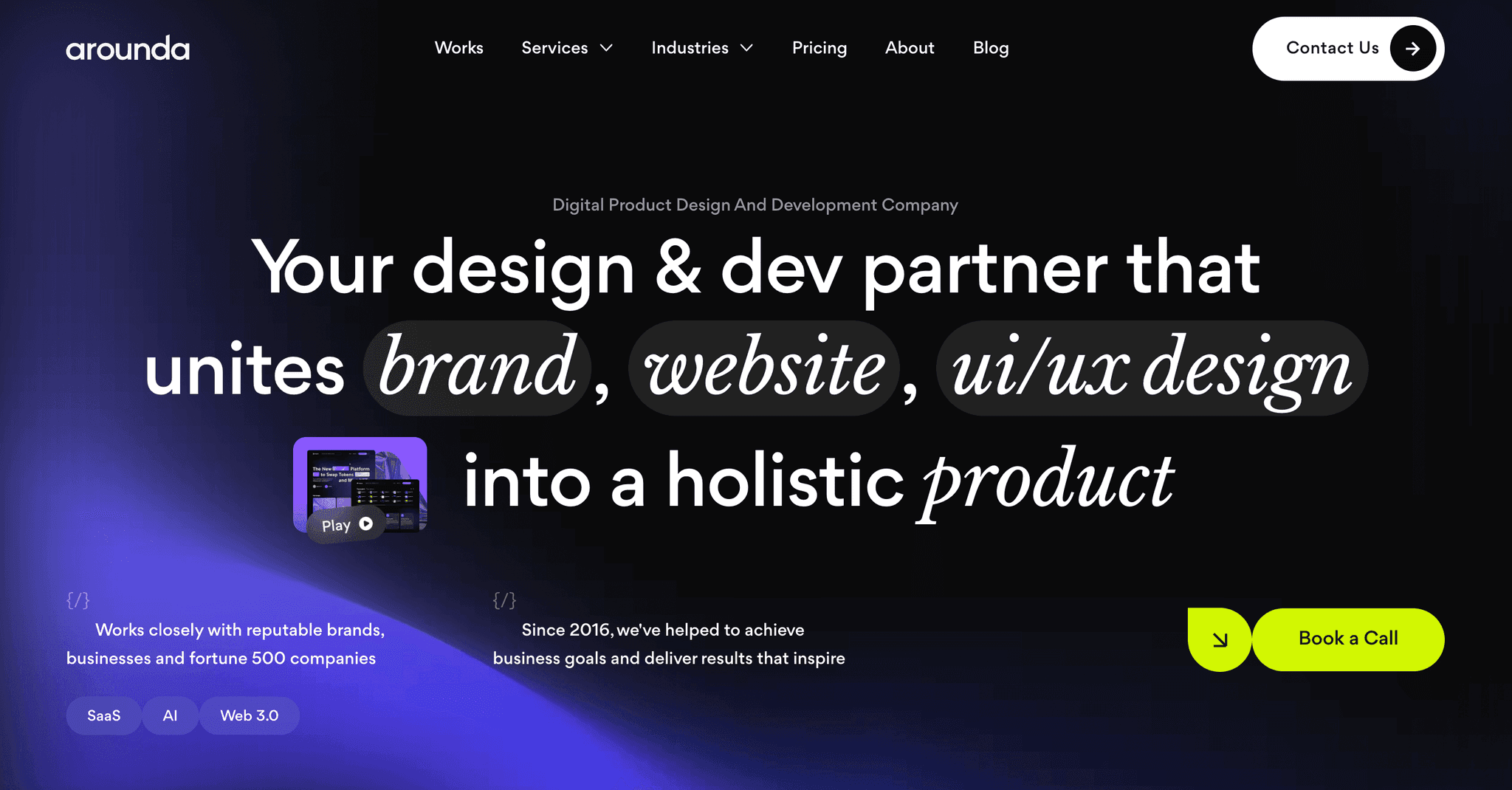
Arounda has shipped over 500 products across nine-plus years, with real, documented work in AI-powered trading platforms and crypto wallets that use machine learning for security. In that kind of product, trust isn't a nice-to-have, it's the whole design problem: users need to feel confident handing over financial decisions to a system they can't fully see inside. Arounda's approach leans on research and competitor analysis before design starts, which shows in how their AI-driven fintech work holds up to real scrutiny, not just a polished demo.
Best for: Funded startups and fintech teams that want strong design alongside strong AI
4. Cieden
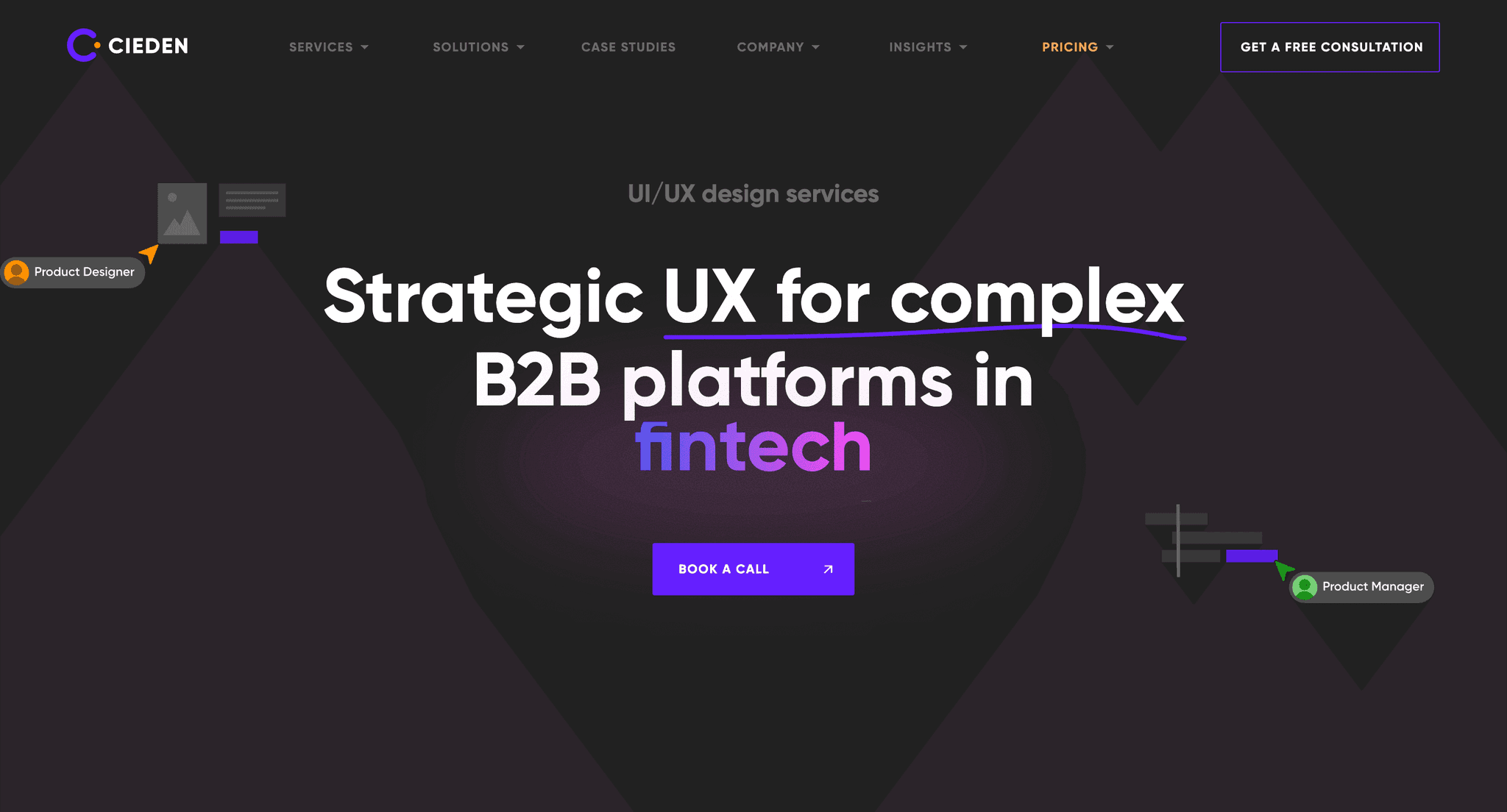
Cieden's focus is making AI behavior understandable and user-friendly, not just functional. Their interface work spans web, mobile, and enterprise platforms, with an emphasis on helping users interact with AI features without feeling confused by what's happening behind the scenes. If your biggest challenge is getting users to trust a model's output, this is a relevant fit.
Best for: Teams building on ML, LLM, or NLP that need users to actually trust the output
5. The Gradient
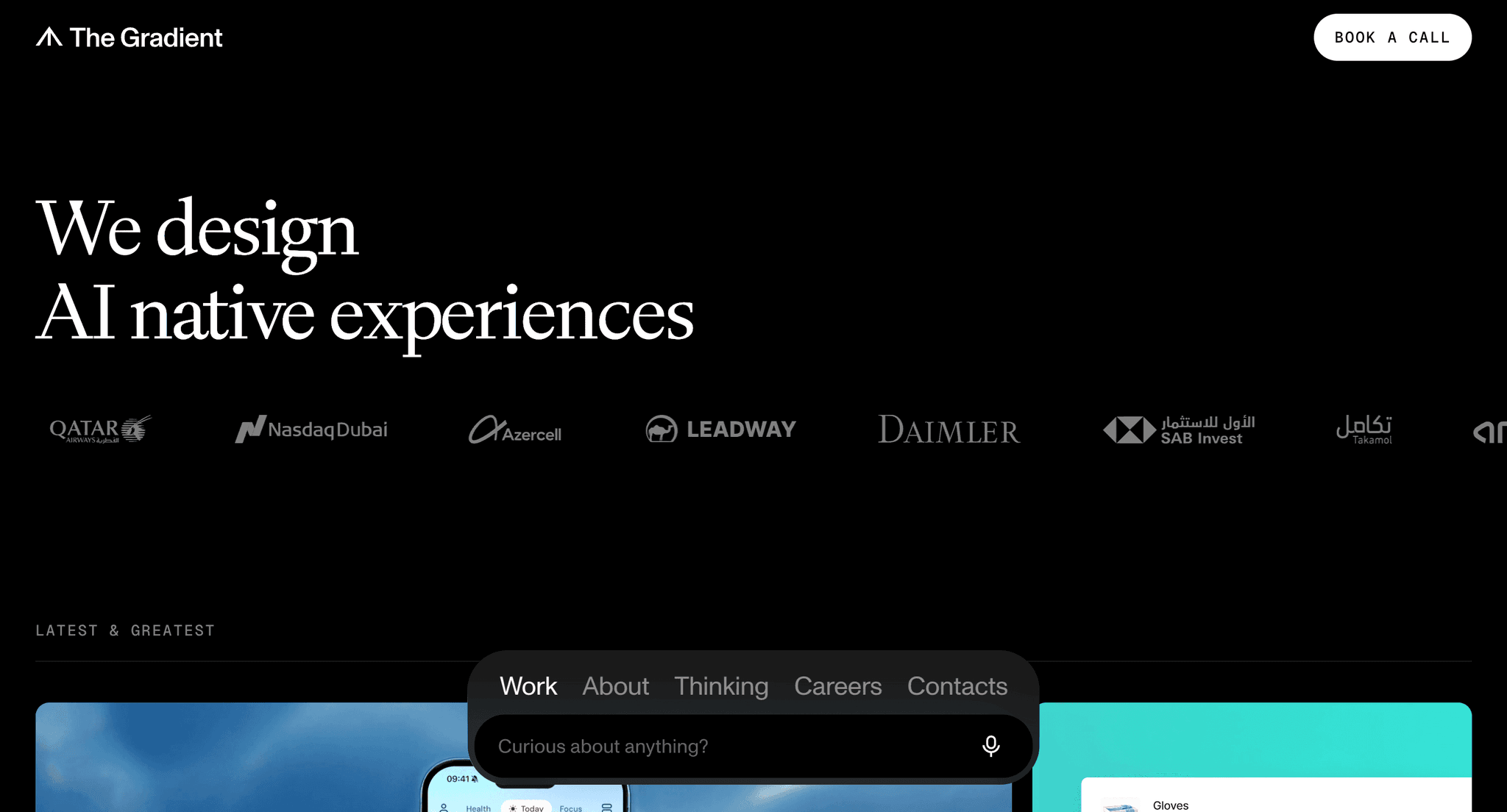
The Gradient builds its design process around the real model, real data, and real users from day one, rather than designing a product first and adding AI later. They've spent close to a decade designing products designed specifically for scale in these industries, which shows in how they handle the operational complexity that comes with regulated or data-heavy sectors.
Best for: AI products in fintech, healthcare, and retail
6. Adam Fard UX Studio
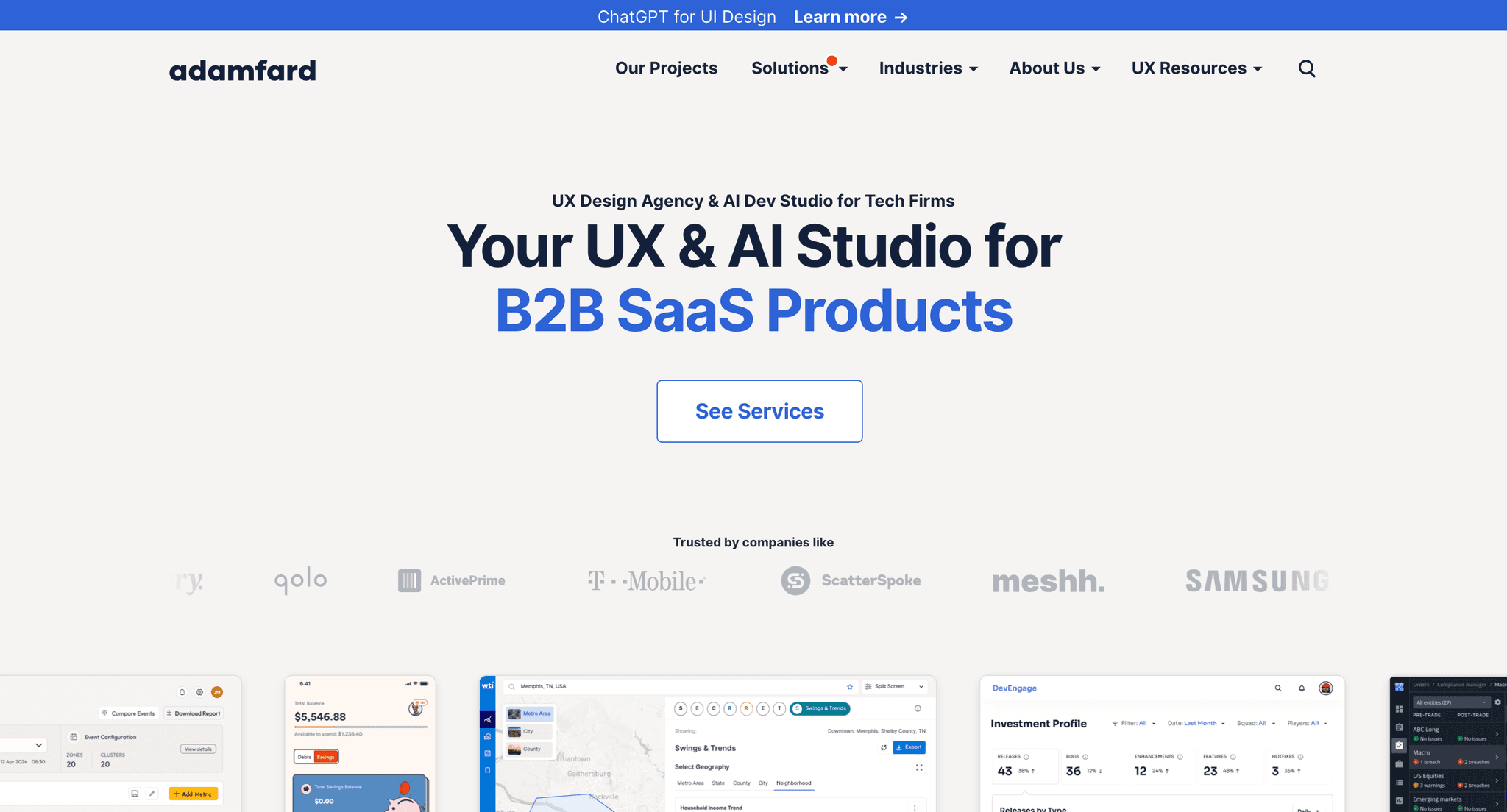
Adam Fard UX Studio keeps user research at the center of its process while using generative AI early on, during exploration and prototyping. That combination suits startups whose designers want to move quickly without skipping the research that makes an AI feature actually useful.
Best for: Startups that want generative AI built into the design process itself, not just the product
7. Fuselab Creative
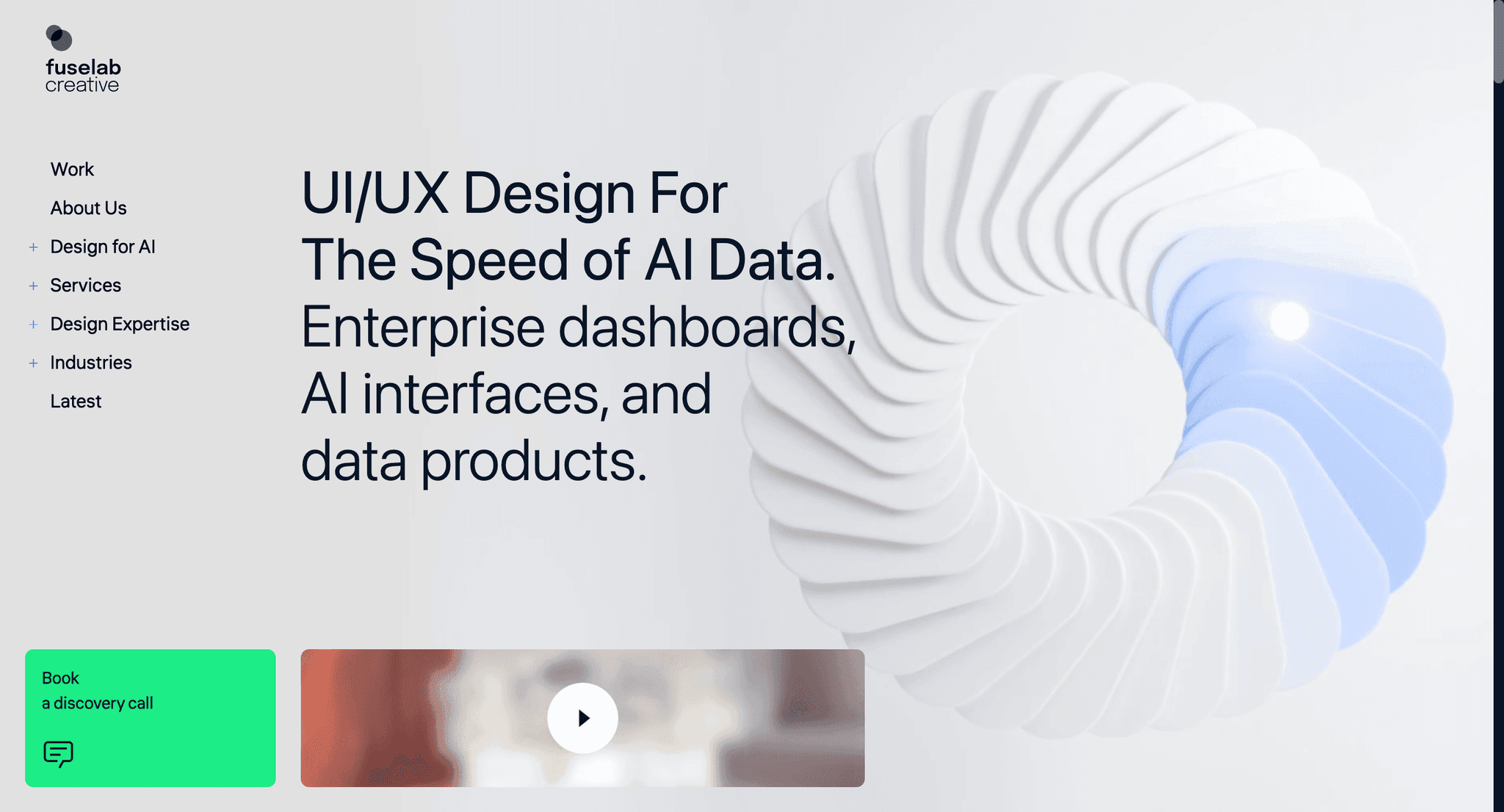
Fuselab draws a clear line between designing a chatbot and designing an AI agent, and treats them as genuinely different problems. Their portfolio includes AI products like Stardog Voicebox, CYNGN, and Grid AI, and their process pays close attention to confidence cues and error recovery: what a user sees when the model is uncertain, and what happens when it's wrong. If your product involves an AI agent taking real actions, not just answering questions, this is worth a close look.
Best for: Products where users need to understand what the AI is doing and why
8. Lazarev.agency
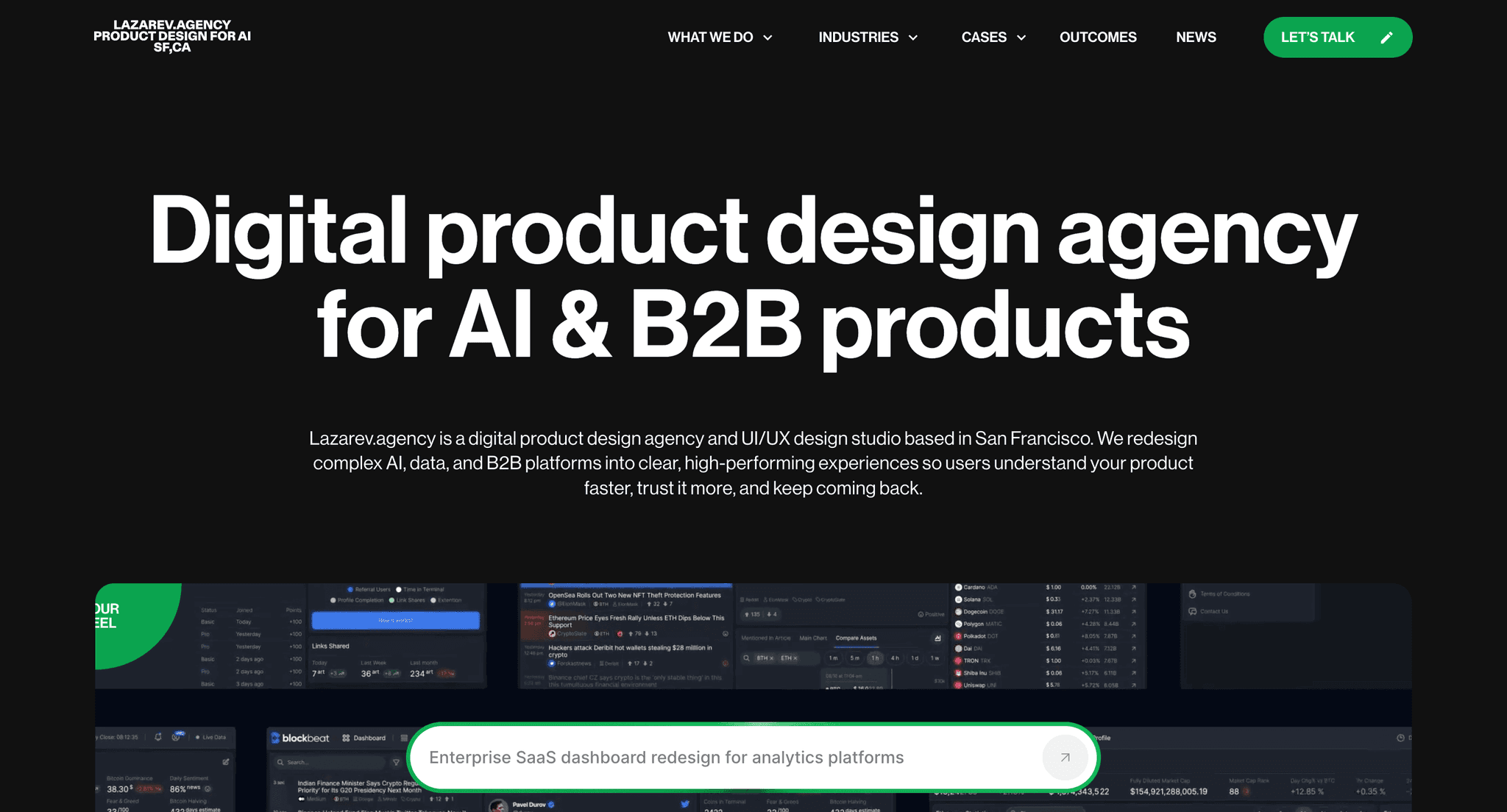
Lazarev.agency works on the kind of products where machine learning and predictive analytics sit at the core of the user experience. Their focus is making that output usable and user-friendly inside a SaaS interface, rather than leaving users to interpret raw model output on their own.
Best for: Data-heavy AI SaaS products at scale
9. Neuron
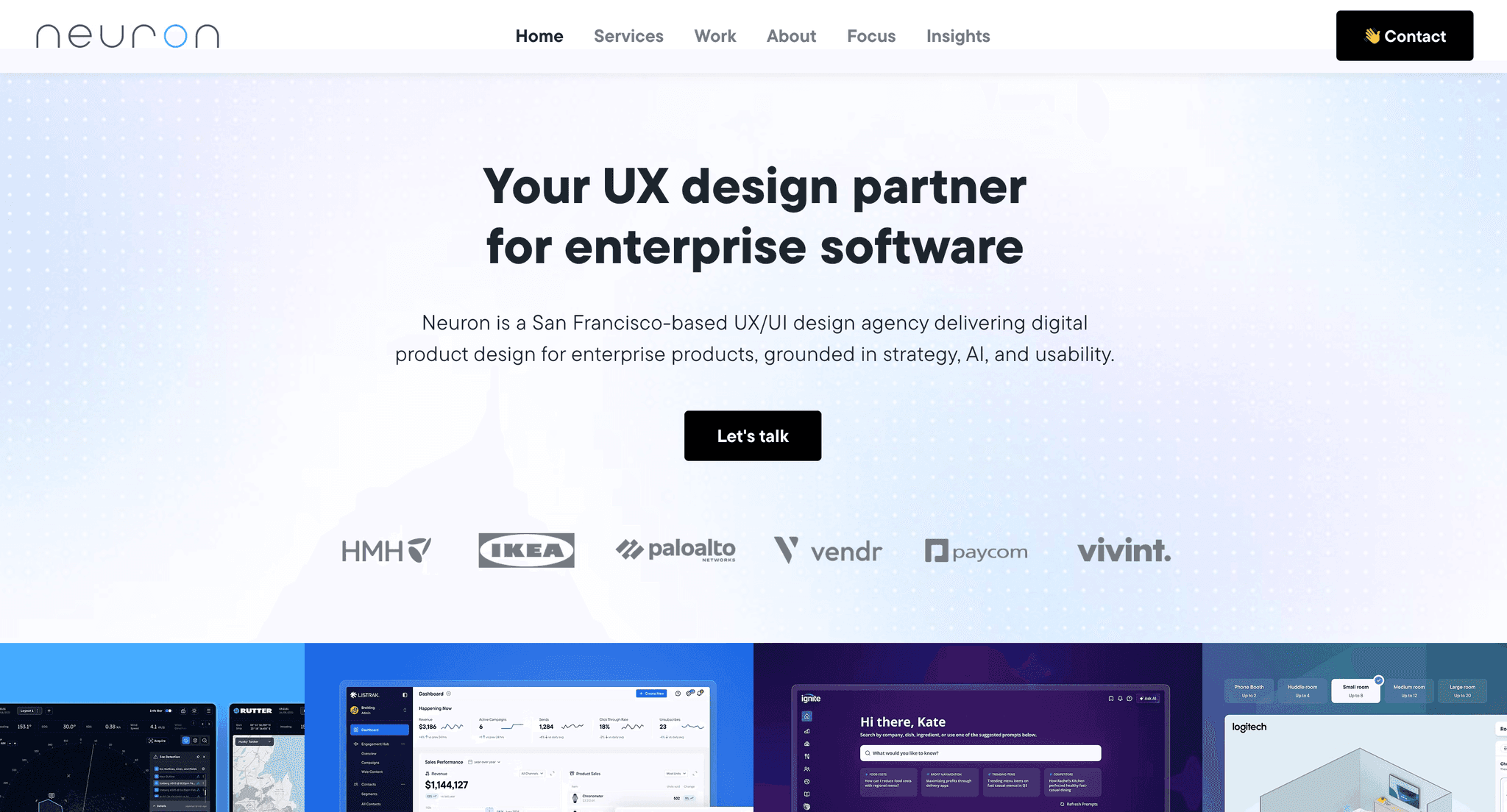
Neuron understands what enterprise UX actually looks like day to day: dense workflows, data-heavy screens, and users who spend hours inside the same tool. Their AI practice covers both new AI products and adding intelligence into legacy platforms, and their designers build data visualization work meant to make complicated tools usable rather than simpler on the surface but still slow underneath. They're less suited to consumer products or brand-first work, which isn't their focus.
Best for: Enterprises adding AI into existing, already-complex software
10. Onething Design
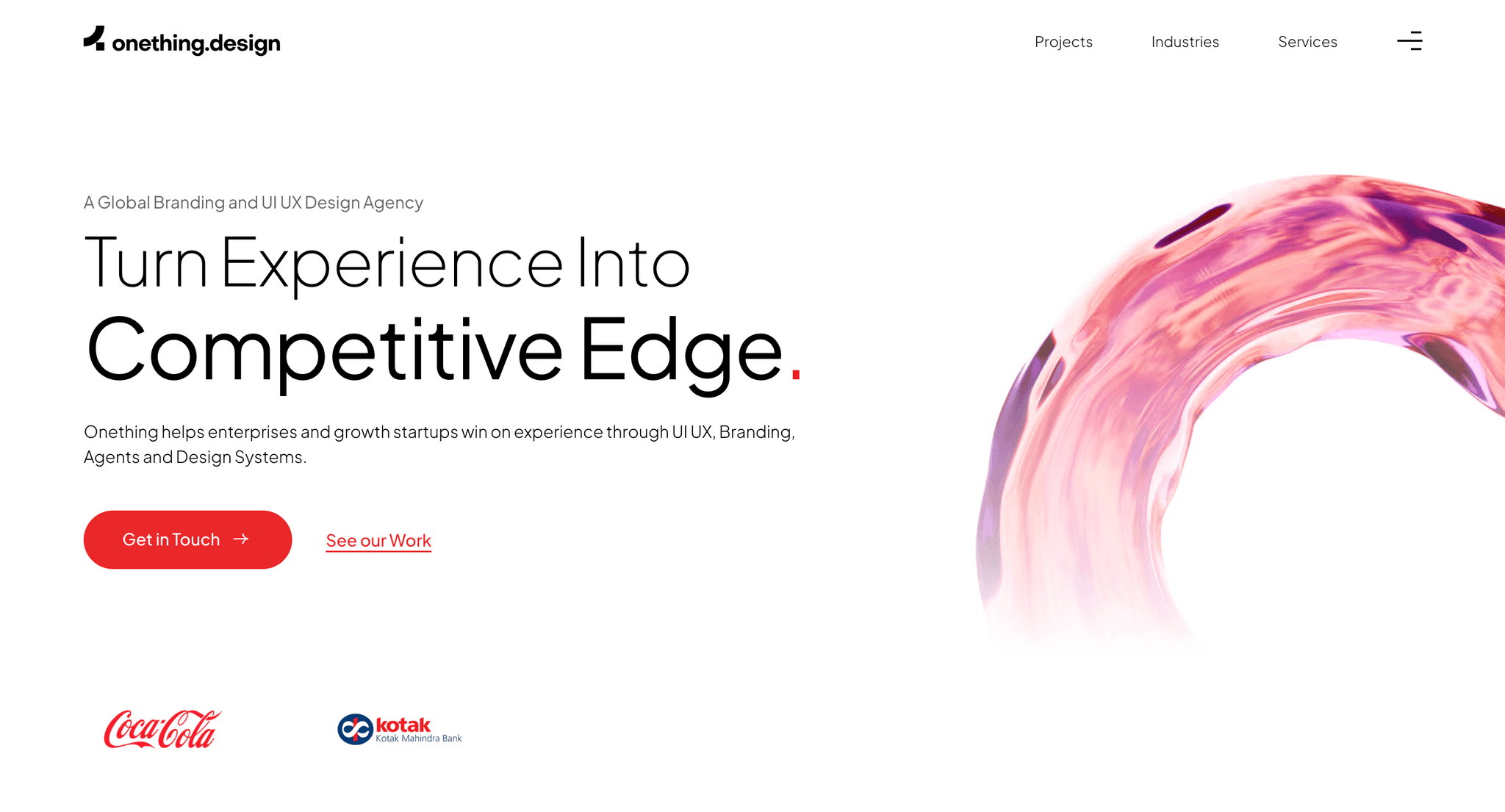
Onething Design runs a dedicated practice specifically for agentic, AI-driven experiences, alongside its core UI/UX and design systems work. Their project for TraqCheck, an AI-powered talent verification and sourcing tool, shows this in practice: designing the actual product experience around an AI agent doing real work, not just a chat window sitting on top of an existing product. If your engagement is narrowly about getting the model-output UI right, rather than redesigning a whole product, this is a good fit.
Best for: Startups and mid-size teams that need a focused engagement, not a full product rebuild
How to choose between them
With 10 solid options, the right pick usually comes down to a few honest questions about your product and your team, not which agency has the most impressive logo wall.
-
What stage is your product at? Early-stage teams still validating an idea benefit from an agency that can move fast and iterate, without a heavy process built for enterprise scale. Later-stage or enterprise teams need a partner who can handle more moving parts on real AI projects: multiple user roles, compliance requirements, or a system that already has real users depending on it.
-
Is your AI a chatbot, or is it an agent? A chatbot answers questions inside a conversation. An AI agent takes actions on a user's behalf across tools and systems, which means it needs to show what it's doing, its status, and a clear way to step in or stop it. Not every agency on this list has designed both AI solutions. Ask directly which one they've actually worked on, since the two require different thinking.
-
Do you need a specialist, or does a generalist with real human expertise in AI work just as well? Some teams need an agency that lives and breathes AI product design. Others just need a strong general design partner who happens to have shipped a few AI products well, with the same human expertise either way. Neither is automatically the better choice. It depends on how central AI actually is to your product, versus one feature among many.
-
Do you want an embedded team, or a defined project engagement? Some agencies work best as an extension of your own team over months, fitting into your existing workflows. Others are built for a scoped project with a clear start and end. Ask how each agency typically structures engagements before assuming either model.
-
What's this going to cost? Pricing across this space varies too widely to quote a single number with any honesty. It depends on scope, team size, how much research is involved, and whether the engagement is project-based or ongoing. As AI adoption keeps growing, ask each agency for a real estimate based on your specific product, rather than trusting a generic number from a blog post, including this one.
The best way to actually compare agencies, and to stay ahead as your product grows, is to ask each one the same set of questions: what's your track record on shipped AI products, how do you handle uncertainty in the interface, and what does a typical engagement with a team like ours actually look like.
Still not sure which one fits?
If you're weighing your options and still not sure which of these agencies actually fits your product, that's a good sign you're asking the right question instead of just picking a name off the list.
MagicFlux works with SaaS and healthcare teams building AI-powered products with real complexity behind them: multiple user roles, sensitive data, or decisions that need to earn a user's trust before they'll rely on them. If that sounds like your product, take a look at our AI UI/UX design work.
Not ready for a conversation yet? Grab our guide on how to brief a UI/UX design agency so you walk into that first call knowing exactly what to ask.
What's the difference between an AI design agency and one that just uses AI tools internally?
An agency that uses AI tools internally is using AI to speed up its own work: faster mockups, quicker drafts, more variations in less time. An AI design agency, in the sense this list means it, designs AI products: interfaces where a model's output shapes what a user sees, decides, or trusts. Plenty of agencies do the first. Fewer have real experience with the second.
How do I tell a genuine AI design specialist from a generalist agency?
Ask to see real client work on a shipped AI product, not a concept or a prototype. Ask how they've designed for uncertainty: what a user sees when the model isn't confident, and what happens when it's wrong. An agency with real experience will have specific answers. One that doesn't will talk in generalities.
What's different about designing chatbot UI vs. AI agent UI?
A chatbot answers questions inside a conversation. An AI agent takes actions across tools and systems on a user's behalf, so the interface has to show what it's doing, its current status, and a clear way to step in or stop it. Designing for an agent carries more risk, since the system isn't just responding, it's acting.
How much does it cost to hire an AI product design agency?
It depends on the scope, the team size, how much research is involved, and whether the engagement is project-based or ongoing. Pricing across this space varies too much to give one honest number. Ask each agency for a real estimate based on your specific product.
Should I hire a specialist AI agency or a generalist UX agency with an AI practice?
It depends on how central AI is to your product. If AI is the core of what you're building, a specialist's track record matters more. If AI is one feature inside a broader product, a strong generalist with real AI experience can work just as well.